

How We Forgot the World is More Than Human
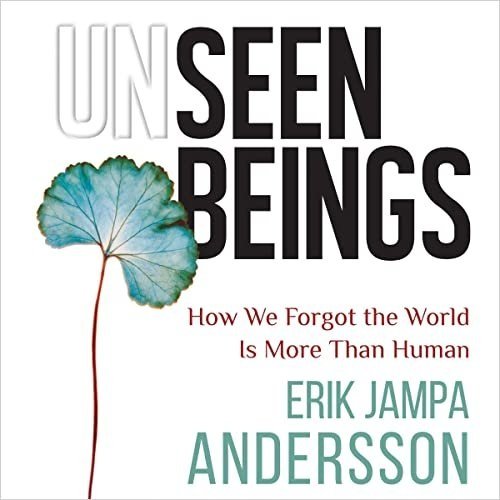
You’ve heard the hard-hitting data and you’ve seen the documentaries. But what will it truly take for humanity to change? We cannot tackle climate change with data alone - we need new stories and new ways of seeing and thinking.

Addressing Our Chronic Ecological Disease
Unseen Beings approaches our climate crisis as a chronic disease, addressing our diagnosis, the causes and conditions of our condition, and our most dire prognosis. Perhaps most importantly, it proposes a radical new approach to treatment, focusing not on carbon quotas and ‘sustainability’ but a radical process of ecological recovery based on a transformation of our relationships with non-human beings.
-
Scientists have demonstrated that anthropogenic climate change has reached utterly catastrophic levels. But despite what mainstream environmentalism would have us believe, it’s not all about managing carbon.
Global industrial societies are currently orchestrating the sixth mass extinction on Planet Earth, threatening the lives of countless human and non-human beings worldwide.
Due to the impact of our behaviour on the fossil record, some scientists have dubbed our present epoch the Anthropocene (the ‘Epoch of Humans’). But this is not an accolade - it is a grim diagnosis. -
In Tibetan Medicine, the ‘Natural State’ (tamel né-mé) is the embodied state that is free from disease. In order to understand a disease, we must understand how a system operates in its absence.
While ‘anthropogenic’ climate change is a serious and specific threat, we must remember that for most of human history, most human societies have had a radically different relationship with the so-called ‘natural’ world.
Unseen Beings takes a modern and science-positive approach to animism, the foundational worldview which asserts that our planet is populated by a plethora of both human and non-human agents. Animism is not a religion or a supernatural ‘belief’ - it is a foundational and deeply rational worldview, based on the recognition that we live in a diverse more-than-human world.
Animism did not decline because it was primitive or irrational - it declined because of human greed, forced conversion, and colonisation. And its eradication directly influenced our descent into the chaos of the Anthropocene.
-
In order to recover, we must better understand the causes of our disease.
The primary root cause is anthropocentrism, the belief that ‘the human’ is existentially set apart and above all other forms of life.
On a most basic level, the myth of the human-centred world is built upon the notion that humanity and nature are intrinsically separate and at odds with one another.
There is no scientific basis for anthropocentrism. It is not an empirical or rational concept, but a philosophical theory with a specific historical genealogy.
Unseen Beings traces the development of anthropocentrism in Western societies: from the writings of Plato and Aristotle, to the rise of Christianity, to the cruel experiments of Descartes and the disenchantment brought on by the scientific revolution.
-
Climate change is not an impending doom. Humans have been impacting our environments for thousands of years, but colonialism, industrialisation, and capitalism have significantly compounded the severity of our condition and made it increasingly difficult to treat.
While both the causes and consequences of climate change are unevenly distributed across human societies, some of the most dire effects are already being felt globally.
Pandemics are among the clearest examples of how our ecological disregard can lead to profoundly severe consequences for human life. But while this is clearly understood on a scientific basis, we struggle to make sense of the connection.
To help clarify this dynamic, Unseen Beings explores the phenomenon of infectious disease from the perspective of Traditional Tibetan Medicine, which teaches that contagious diseases (and other ‘provocation’ disorders) arise as a consequence of our transgressions against the natural boundaries of ‘unseen’ non-human beings.
-
‘Treating’ climate change effectively will require far more than good data. While Earth system scientists and climatologists are excellent at demonstrating the symptoms and pathogenesis of our disease, they are not trained to help us navigate the social, political, and philosophical factors that inform our destructive behaviours. And while they can certainly help us identify the main behaviours that we need to change, they struggle to establish how these changes can most effectively be implemented.
For this reason, our path of recovery must include far more than scientists. We need artists, historians, sociologists, storytellers, songwriters, and myth-makers to be engaged in this process.
Mythology is a particularly important factor, and Unseen Beings explores some of the ways that dynamic engagement with ‘important stories’ can help us make sense of the more-than-human dynamics of climate change.
Most importantly, our approach to mitigating climate catastrophe must go beyond legal, economic, and even ethical domains. Instead of viewing climate destruction as a problem of anthropocentric ethics, we must recognise it as an issue of relationship. We must be compelled to care - not only about our own future, but about the lives of the non-human beings with whom we share our world.
-
Our path of recovery is not just a process of ‘treating’ a disease. There is no single ‘pill’ that will save us from our climate woes. We don’t simply need to ‘recover’ from our ecological illness, we need to recover a sense of what it means to be human in a more-than-human world.
In following the model laid out by Siddhartha Gautama as a basis for the Buddhist path to liberation, Unseen Beings proposes an Eightfold Path of Natural Recovery, focusing specifically on our relationships with non-human beings.
By transforming our worldview, our intentions, our modes of speaking and behaving in the world, and our approaches to livelihood, mindfulness, and the concentration of our efforts, we can shift from a mindset of ‘fixing’ climate change to one of authentic recovery.
True wellness (individual, social, and ecological) is about more than being free from the symptoms of disease. It’s about co-creating a life worth living. We needn’t settle for alienation. The world is an enchanting and magical place, full of countless kinds of incredible beings. We simply need to learn to see.
An Interdisciplinary Approach
The way we currently talk about the environment is insufficient for fully understanding the causes of our climate crisis, and science alone cannot bring us to an effective treatment. We need to take an interdisciplinary approach, bridging numerous fields and methods of engagement to transform our very understanding of the so-called ‘natural world.’ Unseen Beings combines research from the following fields to establish an integrative and holistic approach to ecological recovery:

Deep Biology
Modern research has demonstrated that cognition and sentience, rather than being a function of the human or animal brain, is in fact an underlying component of all biological life. Approaching the non-human world from this basis allows for a far more enchanting and relational approach to ecology and climate justice.

History
History is essential for understanding how and why our modern ways of living came into being. Unseen Beings explores the history of philosophy, religion, and colonial expansion from a critical ecological perspective, helping us to understand where our dominant worldviews came from, and why they persist.

Religion
Religion is a powerful force - sanctifying our ‘beliefs’ about the world and establishing deep and emotional bonds between communities and between practitioners and their worldviews. Unseen Beings explores how our relationships with non-human beings have been negotiated across religious traditions, including in Christianity and Buddhism.

Mythology
Myths can act as medicine or poison, depending on the myth itself and its context of use. Mythology has long formed the backbone of human society, informing and constructing our respective worldviews. But we have largely forgotten how to engage with myth in a healthy and generative way. Unseen Beings demonstrates the invaluable nature of myth on our path of recovery.
Taking Traditional Knowledge Seriously
It is no surprise that traditional and indigenous forms of knowledge have long been disregarded in the formation of the ‘modern’ world. But even when well-intentioned movements seek to acknowledge and honour these ancient forms of wisdom, we tend to treat them as ‘beliefs,’ ‘cultural practices,’ and even ‘folklore.’
Our consumption-driven society has convinced us that the only way to engage with such fields is through commodification and appropriation, treating them as mere novelties.
As a trained Tibetan Medicine practitioner with 20 years of experience in the Tibetan Buddhist tradition, Erik Jampa Andersson takes a radically different approach. Traditional knowledge is knowledge, not mere ‘belief,’ and even modern science has come to recognise that many ‘traditional’ ideas about our world are profoundly rational and truthful.
Unseen Beings seeks to re-frame our approaches to these ‘traditional’ systems. Paying lip-service to indigenous traditions on the basis of cultural pluralism is not enough. We need to listen to the elders, storytellers, healers, and water protectors, and to take their advice seriously.


Inspirations and Reading Recommendations

About the Author
Erik Jampa Andersson, MA, is an Environmental Historian and interdisciplinary scholar specialising the intersection of ecology, spirituality, health, and mythology. He holds a Masters in History from Goldsmiths, University of London, and is a graduate of the Shang Shung Institute School of Tibetan Medicine.
Erik has spent twenty years studying Tibetan Buddhist philosophy, practice, and ritual arts, as well as traditional perspectives on humanity’s place in a more-than-human world. Erik teaches globally on a range of topics, and offers private mentorship and consultations for clients through Shrimala.